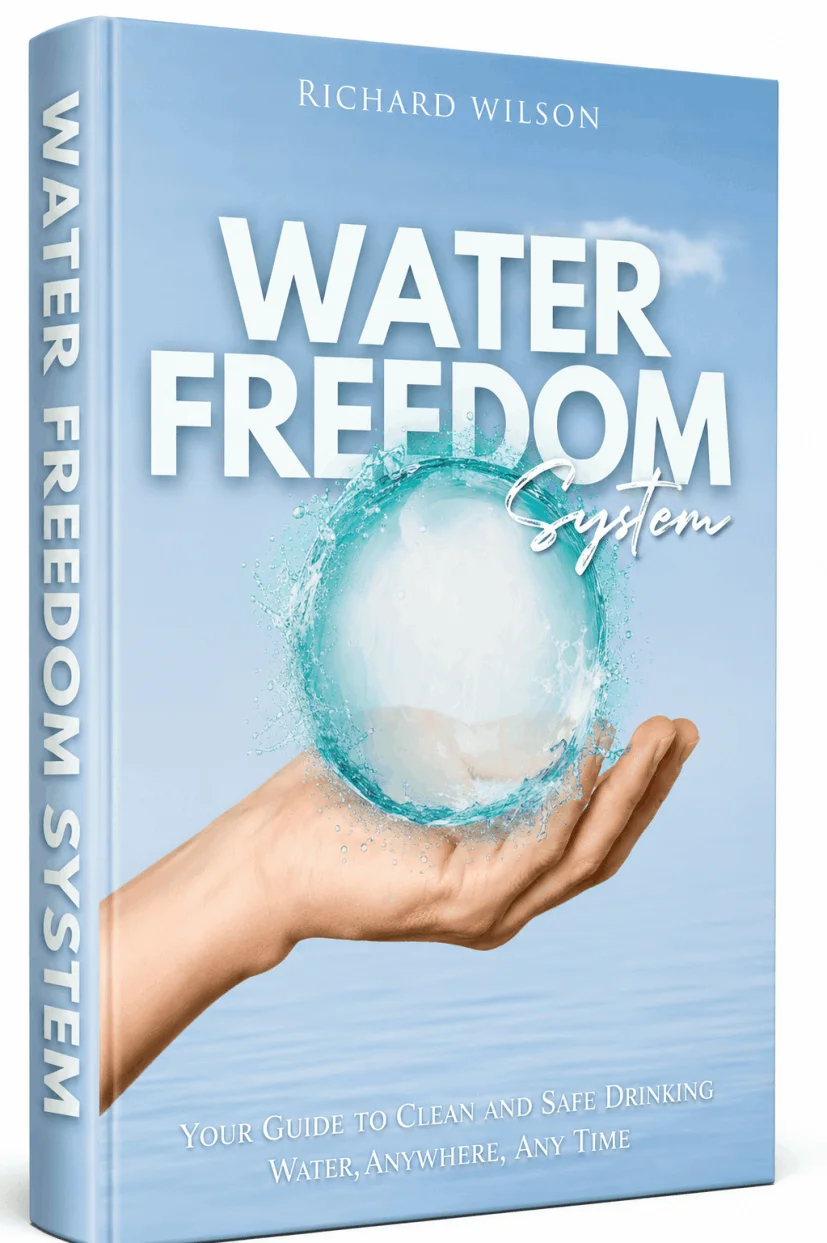
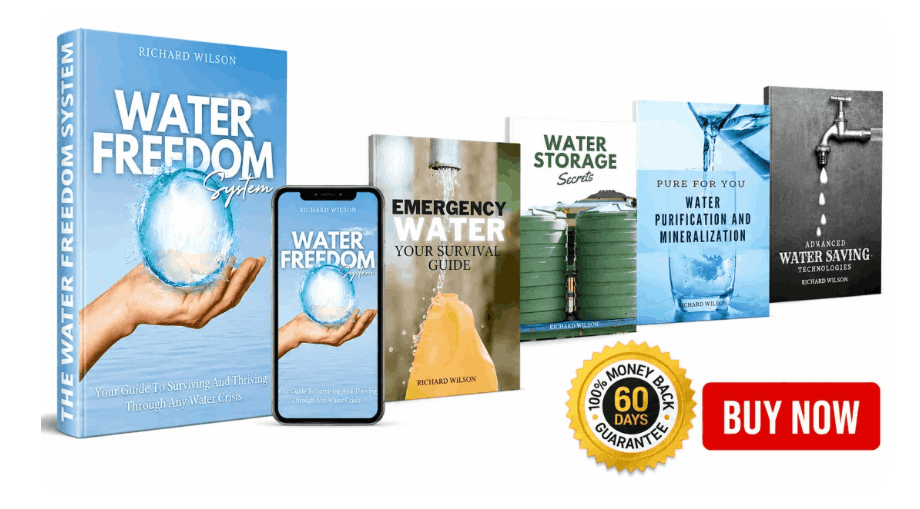
The Water Freedom System is a downloadable DIY guide created by Chris Burns that teaches users how to build a small-scale atmospheric water generator at home. Rather than shipping a completed machine, the program provides video training, printable blueprints, component diagrams, and a materials list that the buyer can use to source parts locally.
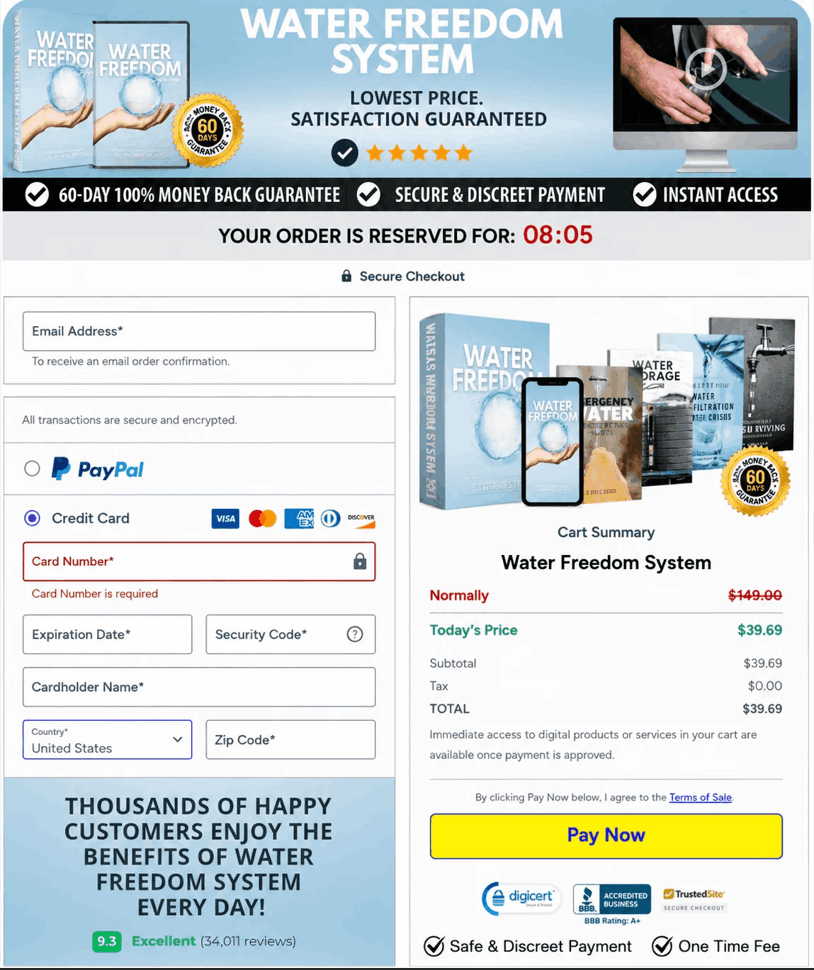
The core proposition is straightforward: by understanding the principles of condensation, anyone can construct a device that extracts moisture from ambient air and converts it into drinkable water. The guide is typically priced under $149 as a one-time payment, with a 60-day money-back guarantee. Optional upsells offer additional preparedness guides, though these are not required for the core system.
The target audience includes homeowners concerned about emergency preparedness, off-grid households, survivalists, gardeners, and anyone interested in reducing dependence on municipal water supplies or bottled water purchases. For these users, the appeal lies in the promise of water independence—the ability to generate a portion of one's daily water needs without relying on wells, municipal infrastructure, or store-bought supplies.
It is crucial to understand what the Water Freedom System is not. It is not a finished product that arrives ready to plug in. It is not a commercial-grade atmospheric water generator capable of producing hundreds of gallons per day. And it is not a magic solution that works equally well in all climates. The program is best understood as an educational blueprint that teaches the principles and practical steps of DIY water harvesting, leaving the actual construction, sourcing, and operation to the user.
“As someone who takes emergency preparedness seriously, the Water Freedom System has been a game-changer. The guide is straightforward and doesn't require any technical expertise. I love that I can source parts locally and don't have to rely on expensive proprietary filters. It's not a plug-and-play appliance, but that's part of the appeal—I built it myself and understand exactly how it works. Worth every penny!”
“I was skeptical at first, but after building the system and running it for a month, I'm genuinely impressed. Living in a humid area, I'm collecting several gallons per day—enough to reduce my bottled water purchases significantly. The instructions were easy to follow, and I had it assembled in a weekend. The 60-day money-back guarantee gave me confidence to try it, and I'm glad I did. Highly recommend for anyone wanting a backup water source!”
“We live in a rural area and rely on a well that occasionally runs low. The Water Freedom System has been a reliable backup during dry spells. It took some patience to set up, but once running, it produces a steady supply of water. The filtration guidance is excellent, and I feel confident our water is safe to drink. I've recommended it to several neighbors already!”
The Water Freedom System is a digital DIY guide that teaches users how to build their own atmospheric water generator—a device that extracts drinking water from the air by condensing moisture. Created by Chris Burns, the program provides video training, printable blueprints, component diagrams, and materials lists rather than a finished product. The core premise is straightforward: by understanding the principles of condensation, anyone can construct a small-scale system that harvests water from ambient air.
The guide is typically priced under $50 as a one-time payment and includes a 60-day money-back guarantee. It targets homeowners, preppers, off-grid households, and anyone seeking greater water independence. Rather than shipping a completed machine, the system teaches users to source parts locally—such as cooling elements, fans, collection reservoirs, and filtration components—and assemble them according to the program's instructions. Optional upsells offer additional preparedness guides, but these are not required for the core build.
The Water Freedom System's effectiveness depends heavily on environmental factors, particularly humidity and climate. In humid regions with relative humidity above 60%, a well-built system might produce several gallons of water per day. However, in arid climates with humidity below 30%, condensation-based harvesting becomes impractical without specialized materials. The program's marketing suggests it works in any climate above 30% humidity, but realistic production at that threshold is minimal—perhaps only a trickle rather than a meaningful daily supply.
It is important to understand what the Water Freedom System is not. It is not a finished appliance that arrives ready to plug in, not a commercial-grade atmospheric water generator capable of producing hundreds of gallons daily, and not a magic solution that works equally well everywhere. It is best understood as an educational blueprint that teaches the principles and practical steps of DIY water harvesting, leaving construction, maintenance, and safety considerations to the user.
The system operates on a simple physical fact: when warm, moist air is cooled below its dew point, water vapor condenses into liquid droplets. This is exactly how a cold glass of water forms "sweat" on a humid day. The guide teaches you to create the conditions for this process to occur continuously inside a controlled chamber.
The process begins with air intake. A fan or blower draws ambient air into the system, where it passes through an intake filter that removes dust, pollen, and larger particles. The filtered air is then directed over a cold surface—usually a refrigeration coil, evaporator, or heat exchanger. This cooling element is chilled to a temperature below the air's dew point, causing water vapor to condense into liquid droplets on the cold surface.
Once condensation occurs, the water droplets fall or flow by gravity into a collection reservoir or storage tank. A drain pan positioned beneath the cooling coils channels water into the tank. The collected water is not immediately drinkable—it passes through filtration stages, often including sediment filters, activated carbon, and optionally UV sterilization to remove contaminants. The guide advises that additional filtration, such as a 0.05-micron undersink filter, is recommended for drinking purposes.
After purification, the water is stored in food-grade containers for daily use or emergency reserves. Users must maintain the system with regular cleaning and filter replacement to prevent bacterial growth and ensure water safety.
Several key factors affect performance. Humidity is the most critical—higher humidity means more water available to condense, and the system works best above 60% relative humidity, while below 30% it becomes impractical. Temperature also matters because warm air holds more moisture than cold air, so production typically increases in warm, humid conditions. The cooling capacity of the element must reach below the dew point—more powerful cooling means more condensation. Airflow ensures fresh moist air continuously contacts the cold surface, and surface area allows more condensation to occur per cycle.
The Water Freedom System stands apart from other water security solutions in several important ways. Understanding these distinguishing features helps explain why it has attracted attention among homeowners, off-grid enthusiasts, and preparedness-minded individuals.
It Is a DIY Guide, Not a Finished Product
The most fundamental distinction is that the Water Freedom System is an educational blueprint, not a physical appliance. While commercial atmospheric water generators can cost thousands of dollars, this program provides step-by-step instructions, printable blueprints, and a materials list that allows users to construct their own system from locally sourced components. This approach dramatically reduces the upfront cost, with users typically spending under $50 for the guide itself** and sourcing parts from hardware stores for a total build cost often cited between **$200 and $300. The trade-off is that users must invest their own time, effort, and DIY skills rather than simply plugging in a machine.
It Adapts Proven Technology for a New Purpose
The system is based on the same condensation principles used in everyday dehumidifiers and air conditioners. However, there is a crucial difference in purpose. Traditional dehumidifiers are designed to control indoor humidity and improve comfort, discarding the collected water. The Water Freedom System, by contrast, focuses specifically on collecting and purifying that moisture for use as a water source. This adaptation of familiar technology toward a different objective—gathering atmospheric moisture rather than simply regulating humidity—is what makes the project unique from a conceptual standpoint.
It Emphasizes Accessibility and Low Technical Barriers
Unlike advanced atmospheric water harvesting systems that require desiccant materials, MOF chemistry, or specialized engineering, the Water Freedom System is designed for non-engineers. Reviews consistently highlight that the instructions are straightforward, the materials are readily available, and no technical skills or electrical knowledge are required to complete the build. One user review noted that they, as a layman without technical jargon, could understand all the instructions clearly and assemble the system in about two and a half hours. This accessibility is a deliberate design choice that differentiates it from more complex or expensive alternatives.
It Includes Comprehensive Supporting Materials
Beyond the core construction guide, the program bundles additional resources that enhance its value. These include water purification and filtration techniques, maintenance and cleaning procedures, scaling instructions to increase production, and emergency water collection methods. The program also typically includes bonus preparedness guides and offers lifetime updates to the materials. This comprehensive package approach distinguishes it from a simple set of blueprints—it aims to provide a complete water independence education, not just a single project plan.
It Acknowledges and Addresses Climate Variability
Unlike products that make blanket claims about performance, the Water Freedom System openly discusses the role of humidity and climate in determining output. The program acknowledges that results depend heavily on local humidity and that users in very dry climates may experience lower output. This honesty about limitations—while still positioning the system as viable for most climates above 30% humidity—sets realistic expectations and encourages users to assess their own environmental conditions before investing. This transparency is a notable differentiator in a market often filled with exaggerated promises.
It Offers a One-Time Payment Model with No Ongoing Fees
The Water Freedom System is sold as a one-time purchase with no subscription fees, no monthly costs, and no proprietary replacement parts. Unlike commercial atmospheric water generators that may require expensive filter cartridges or service contracts, the DIY nature of the system means users can source common replacement parts from local stores. Combined with a 60-day money-back guarantee, this pricing model lowers the financial risk for those who are curious but uncertain about whether the system will work in their specific situation.
The Water Freedom System was created by Chris Burns, who is identified as the creator of this DIY guide for building an atmospheric water generator. He developed the program as a practical resource for individuals seeking greater water independence and emergency preparedness.
Chris Burns is described as a farmer, which suggests he has hands-on experience with self-sufficiency, resource management, and practical problem-solving—qualities that align with the DIY nature of the program. His background likely informed the straightforward, accessible approach that the guide takes, avoiding overly technical language and focusing instead on actionable steps that ordinary people can follow.
The program he created is presented as a video training course combined with printable blueprints and a materials list, typically priced under $50 as a one-time payment. It is not a physical device but an educational blueprint for constructing your own atmospheric water generator using condensation principles. The guide teaches users how to source components locally and assemble a functional system without requiring specialized engineering knowledge or expensive equipment.
Under Chris Burns' direction, the Water Freedom System has been positioned as an affordable alternative to commercial atmospheric water generators, which can cost thousands of dollars. The program emphasizes self-reliance, sustainability, and practical water security, appealing to homeowners, off-grid households, survivalists, and gardeners who want a backup water source that reduces dependence on municipal supplies or bottled water.
The Water Freedom System is marketed as more than just a DIY guide—it positions itself as a tool that unlocks self-reliance, problem-solving skills, and a preparedness mindset. While the phrase "activates your inner genius" is promotional language rather than a scientific claim, there are genuine ways the program challenges users to think differently about water security, resource independence, and practical engineering.
In summary, the Water Freedom System activates inner genius by transforming users from passive consumers into active builders, environmental observers, and resource managers. The program does not make anyone a genius, but it does provide a structured path to practical skills, environmental awareness, and a mindset of preparedness that many people find valuable—especially in an era of increasing uncertainty about water availability.
Here are the key benefits that make the Water Freedom System an appealing option for those seeking greater water independence and emergency preparedness.
With The Water Freedom System Program , get 100% satisfaction or a 60-day money-back guarantee. We trust our program and give a 60-day money-back guarantee within 90 days of your purchase of The Water Freedom System Program. So, hurry and buy one for yourself to unlock your brain’s potential and enjoy high thinking abilities, a focused mind, completely risk-free.
You’ll never be able to buy
The Water Freedom System Cheaper than Today!
The system uses condensation principles, similar to how a dehumidifier or air conditioner works. A fan draws ambient air into the device and passes it over a cold surface (such as a refrigeration coil or heat exchanger). When that surface is colder than the air's dew point, water vapor condenses into liquid droplets, which are then collected and filtered. The science is legitimate and proven—the challenge is in the efficiency and maintenance.
This is where marketing claims and real-world results diverge significantly. Promotional materials claim up to 60 gallons per day, but independent analyses and user reports suggest much lower realistic output. One reviewer noted that a standard room dehumidifier typically produces only about 1 gallon per day, and that achieving 60 gallons would require multiple units running constantly. A more realistic expectation for a DIY system is 1 to 5 gallons per day in favorable conditions, and potentially near zero in dry or cold climates.
Not automatically. Condensed water can pick up dust, pollen, microorganisms, and chemical contaminants from the air and from contact with system components. The Water Freedom System includes filtration guidance, but the program's own materials acknowledge that additional purification is required for drinking water—specifically recommending a medical-grade 0.05 micron filter or a ZeroWater filter jug. A carbon filter alone is not sufficient to remove all pathogens or chemicals. The vendor explicitly states they cannot guarantee the safety of drinking water for legal reasons.
Yes. Most configurations require electricity to power the fan and cooling element (compressor or Peltier device). Some promotional claims suggest the system works "without electricity," but this is misleading—any active condensation-based system requires power to operate the cooling mechanism. Running costs will depend on local electricity rates and how many hours per day the system operates.
The system requires regular cleaning and filter replacement to remain functional and safe. Key maintenance tasks include: cleaning the cooling coils to prevent mold and biofilm buildup, replacing sediment and carbon filters according to manufacturer recommendations, sanitizing the storage tank to prevent bacterial growth, and monitoring water quality periodically. The program's guidance emphasizes that neglecting maintenance can render the water unsafe.
The system's effectiveness depends almost entirely on local humidity and temperature. Marketing materials claim it works in any climate with humidity above 30%. However, at 30% humidity, production would be minimal—perhaps just a trickle. The system performs best in humid regions (60%+ relative humidity) and poorly in arid or cold climates. Users in Arizona, Nevada, or similar dry areas should not expect results comparable to humid states like Florida or Louisiana.
Your online privacy is one thing you can be sure we so much prioritize here and thus do not worry about losing any sensitive credentials while making your purchase of The Water Freedom System from us. Besides, You can count on Clickbank's excellent reputation and vast experience in online transactions to help protect your purchases.
According to the team of experts who created The Water Freedom System , the manufacturers have come up with an amazing refund policy. So, as you buy any of the above-mentioned packages, you will be provided with a great 60-day 100% money-back guarantee.
If in any case this Product does not work for you or if you’re unsatisfied with the effects of the formula for any reason, then you are entitled to a complete refund with no questions asked.
Email : support@thewaterfreedomsystem.com
Best AI Website Creator